Employment Law
Remote work policy with clear rules for hybrid and remote teams
A lawyer will draft or review a remote work policy, covering hybrid work, staff availability, equipment, confidentiality and workplace safety.

100,000+ businesses helped


Get a free quote
We'll get back to you




What's included
Remote work policies that address your team’s unique setup.
Get a lawyer-drafted or reviewed remote work policy covering hybrid work, equipment and security.
What's included
- Consultation to confirm your remote or hybrid work setup
- Drafting or review of one remote work policy
- Clauses on eligibility, availability, communication and supervision expectations
- Terms covering equipment use, confidentiality, security and work health and safety points
- One round of amendments
- Legal input for employee, contractor or mixed-team arrangements
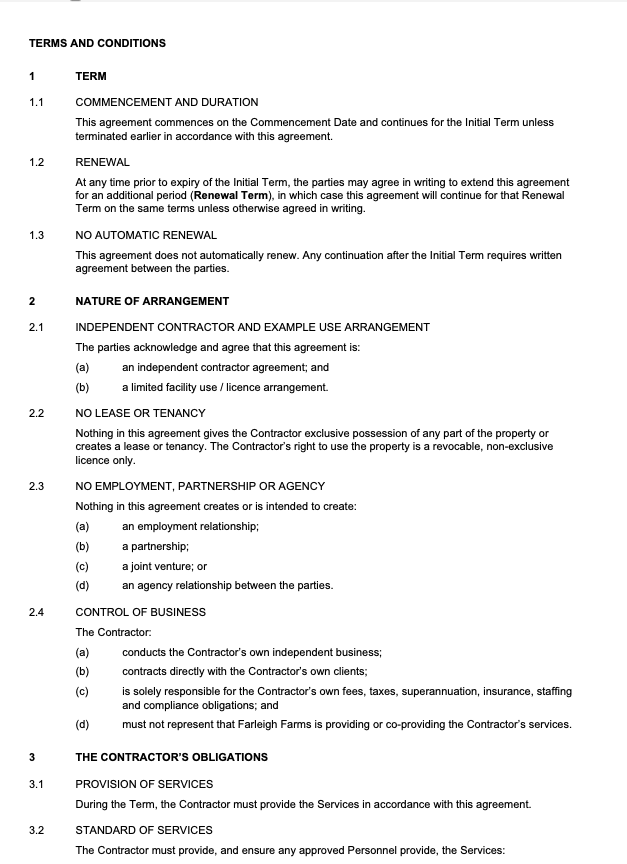
Project
Remote Work Policy
Status
CompletePrepared by

Alex Solo
Senior Lawyer
FAQs
Frequently asked questions
Unsure about how we work? We have gathered the most common questions for your convenience.
Usually when remote work is no longer occasional or ad hoc. If managers are approving work-from-home arrangements differently, staff are using business systems from home on a regular basis, or your team includes a mix of employees and contractors, informal practices can become hard to manage. A written policy helps set one baseline for availability, communication, equipment, confidentiality and safety expectations. It also gives managers something practical to apply day to day, instead of relying on verbal instructions that may vary between teams or change over time.
A remote work policy will often deal with who can work remotely, whether approval is required, expected work hours or availability, communication standards, supervision, equipment use, expense positions, confidentiality, data security and incident reporting. It may also cover workspace expectations, attendance at the office, review of remote arrangements and when approval can be changed or withdrawn. The exact wording depends on your setup. For example, businesses handling sensitive client information may need stronger clauses around access controls, storage, printing and use of personal devices outside the office.
It often turns on how your workforce operates in practice. Relevant details include whether the team is fully remote or hybrid, whether staff attend client sites, what systems they access from home, how managers supervise work, and whether contractors are expected to follow the same internal rules. The contract should reflect the practical arrangement, not just a generic precedent or one-sided checklist. That is important because the factual working arrangement can matter as much as the contract wording, especially where the policy needs to sit alongside employment contracts, contractor terms or existing internal policies.
Sometimes, but it needs careful wording. A single policy can work where the business wants consistent operational rules across the workforce, such as security standards, communication protocols and equipment expectations. Even then, the document should recognise that employees and contractors do not have the same legal relationship with the business. Approval pathways, supervision language and obligations tied to internal processes may need to be expressed differently. If your business uses a mixed team, it is worth checking early whether one document is practical or whether separate wording will better reflect how each group actually works.
A template may help as a starting point, but it often leaves out the details that make the policy usable. Common gaps include how your managers approve remote work, what technology rules apply, whether personal devices are allowed, how office attendance is handled and whether contractors are covered. A generic template can also clash with your employment contracts or other internal policies. This service Your lawyer will explain the practical position and your options in plain English. The document still needs to match your actual practices and be applied consistently across the business.
As an online law firm, we eliminate the headaches of paying us by the hour and finding time to meet with a lawyer in person. We charge a fixed fee, with upfront quotes and transparent pricing, and communicate via phone, email and video chat - whichever suits you! You'll be guided through our process by our expert lawyers, who are Australian-qualified and specialise in technology, intellectual property, contract drafting, corporate and commercial law.
At Sprintlaw, our pricing is transparent and designed for startups and small businesses. Many one-off legal services, including document drafting and reviews, are provided for a fixed fee with an upfront quote before you proceed.
Prices typically range from $250 to $2,500 AUD depending on the complexity and scope of the work. For ongoing support, Sprintlaw Memberships include options such as legal templates, consultations, a legal helpline and credits for services.
If your project is larger or more complex, we will provide a tailored quote after understanding what you need.
Our law firm operates completely online, which means we can help you wherever you are in Australia. We work at The Commons Central - a cool co-working space in Chippendale, Sydney - but our lawyers often work flexibly across various locations.
Our lawyers also work from co-working spaces and home offices in Sydney, Melbourne, Brisbane, Adelaide and Perth, so clients can get help online without needing to meet in person.
From quote to delivery in three simple steps
Getting quality legal help for your business has never been easier or more affordable.
Get a free quote
Our legally trained consultants will prepare a fixed-fee quote for you.
Accept online
Accept your fixed-fee quote and e-sign our engagement letter.
Speak with a lawyer
Our expert lawyers will talk you through your project via phone, video call or whatever suits.
Get a free quote
Our legally trained consultants will prepare a fixed-fee quote for you.
Accept online
Accept your fixed-fee quote and e-sign our engagement letter.
Speak with a lawyer
Our expert lawyers will talk you through your project via phone, video call or whatever suits.



We've helped over 100,000 Australian businesses
From tech startups in Sydney to restaurants in Alice Springs, we consistently deliver a 5 star service.

“Can’t speak highly enough of my experience with Sprintlaw - quality advice, fast and efficient responsiveness and a professional product.”

Alex Wickert
MD, Adapt Leadership
“I’m so glad I used Sprintlaw - it was easy, affordable and their lawyers gave top quality advice. I could tell they really cared about my business.”

Emmy Samtani
Founder, Kiindred
“They’ve helped us tremendously and are seriously knowledgeable and honest. Couldn’t recommend the crew at Sprintlaw more!”

Amit Tewari
CEO, Soul Burger
Industry leaders


















Not sure where to start?
We can help.
Book a phone call with our team to get started.
Need help now?
1800 730 617