Intellectual Property
Collaborative Research Agreement
Draft or review a collaborative research agreement covering IP, data, funding and publication terms.

100,000+ businesses helped


Get a free quote
We'll get back to you




What's included
What this agreement can lock in
A collaborative research agreement drafted or reviewed around the IP, data, funding and publication points that commonly shape research projects.
What's included
- Consultation on the project structure, parties and commercial objectives
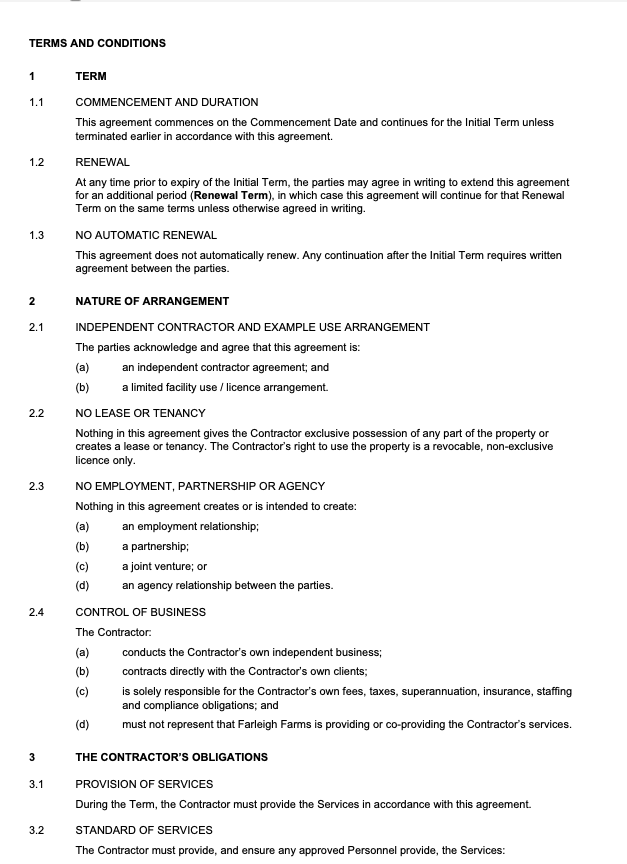
- Drafting or legal review of a collaborative research agreement
- Clauses dealing with background IP, project IP and use of results
- Terms covering confidentiality, data handling and publication rights
- Provisions on funding, milestones, responsibilities and key project mechanics
Project
Collaborative Research Agreement
Status
CompletePrepared by

Alex Solo
Senior Lawyer
FAQs
Frequently asked questions
Unsure about how we work? We have gathered the most common questions for your convenience.
Research projects often begin with aligned goals, but the difficult issues usually appear once results, data or commercial opportunities start to emerge. Without a written agreement, parties can have very different assumptions about who owns existing IP, who owns new outputs, who can publish findings, and whether one side can commercialise the work later. Problems also arise where one party contributes valuable datasets, software, methods or funding without clear usage rights being recorded. A proper agreement helps document those expectations before the project becomes more valuable or more complicated.
These agreements commonly deal with the project scope, each party's contributions, funding or in-kind support, milestones, confidentiality, data access, publication rights and intellectual property ownership. They may also address background IP, ownership of project outputs, licences to use results, commercialisation pathways, liability settings, dispute procedures and what happens if the collaboration ends early. In some matters, the agreement also needs to reflect grant conditions, institutional policies or approval processes that sit around the project. The exact mix of clauses depends on how the collaboration is intended to operate in practice.
Important details include who the parties are, what each side is contributing, whether existing IP, software or datasets are being shared, and what each party expects to do with the results. It also matters whether the project is commercially driven, publication-driven, or trying to balance both. Other factors can include external funding, multiple institutions, overseas participants, sensitive data, ethics requirements or staged milestones. Those points can change how ownership, confidentiality, access rights and publication controls should be handled. The more clearly the project structure is described, the more accurately the agreement can reflect it.
A template may help frame the discussion, but it often does not deal well with the real pressure points in a research collaboration. Generic wording can be too thin on background IP, rights to improvements, publication approval processes, data access, commercialisation rights or exit arrangements if the project stops early. It may also assume a simple two-party relationship when the project actually involves several contributors or institutional requirements. Where the collaboration has commercial value, external funding or mixed academic and industry objectives, a more considered agreement is usually the safer approach.
That depends on whether you need a new agreement or a review of an existing draft, and on how settled the commercial and project terms already are. A review of a reasonably complete draft can often move faster than a matter where ownership, publication rights or funding mechanics are still being negotiated. Timing can also stretch where there are several stakeholders, institutional sign-off steps or detailed comments from the other side. As a practical next step, it helps to have any term sheet, grant documents, draft agreement and summary of contributions ready before work begins.
As an online law firm, we eliminate the headaches of paying us by the hour and finding time to meet with a lawyer in person. We charge a fixed fee, with upfront quotes and transparent pricing, and communicate via phone, email and video chat - whichever suits you! You'll be guided through our process by our expert lawyers, who are Australian-qualified and specialise in technology, intellectual property, contract drafting, corporate and commercial law.
At Sprintlaw, our pricing is transparent and designed for startups and small businesses. Many one-off legal services, including document drafting and reviews, are provided for a fixed fee with an upfront quote before you proceed.
Prices typically range from $250 to $2,500 AUD depending on the complexity and scope of the work. For ongoing support, Sprintlaw Memberships include options such as legal templates, consultations, a legal helpline and credits for services.
If your project is larger or more complex, we will provide a tailored quote after understanding what you need.
Our law firm operates completely online, which means we can help you wherever you are in Australia. We work at The Commons Central - a cool co-working space in Chippendale, Sydney - but our lawyers often work flexibly across various locations.
Our lawyers also work from co-working spaces and home offices in Sydney, Melbourne, Brisbane, Adelaide and Perth, so clients can get help online without needing to meet in person.
From quote to delivery in three simple steps
Getting quality legal help for your business has never been easier or more affordable.
Get a free quote
Our legally trained consultants will prepare a fixed-fee quote for you.
Accept online
Accept your fixed-fee quote and e-sign our engagement letter.
Speak with a lawyer
Our expert lawyers will talk you through your project via phone, video call or whatever suits.
Get a free quote
Our legally trained consultants will prepare a fixed-fee quote for you.
Accept online
Accept your fixed-fee quote and e-sign our engagement letter.
Speak with a lawyer
Our expert lawyers will talk you through your project via phone, video call or whatever suits.



We've helped over 100,000 Australian businesses
From tech startups in Sydney to restaurants in Alice Springs, we consistently deliver a 5 star service.

“Can’t speak highly enough of my experience with Sprintlaw - quality advice, fast and efficient responsiveness and a professional product.”

Alex Wickert
MD, Adapt Leadership
“I’m so glad I used Sprintlaw - it was easy, affordable and their lawyers gave top quality advice. I could tell they really cared about my business.”

Emmy Samtani
Founder, Kiindred
“They’ve helped us tremendously and are seriously knowledgeable and honest. Couldn’t recommend the crew at Sprintlaw more!”

Amit Tewari
CEO, Soul Burger
Industry leaders


















Not sure where to start?
We can help.
Book a phone call with our team to get started.
Need help now?
1800 730 617